Equipment
Conveying Equipment & Material Handling
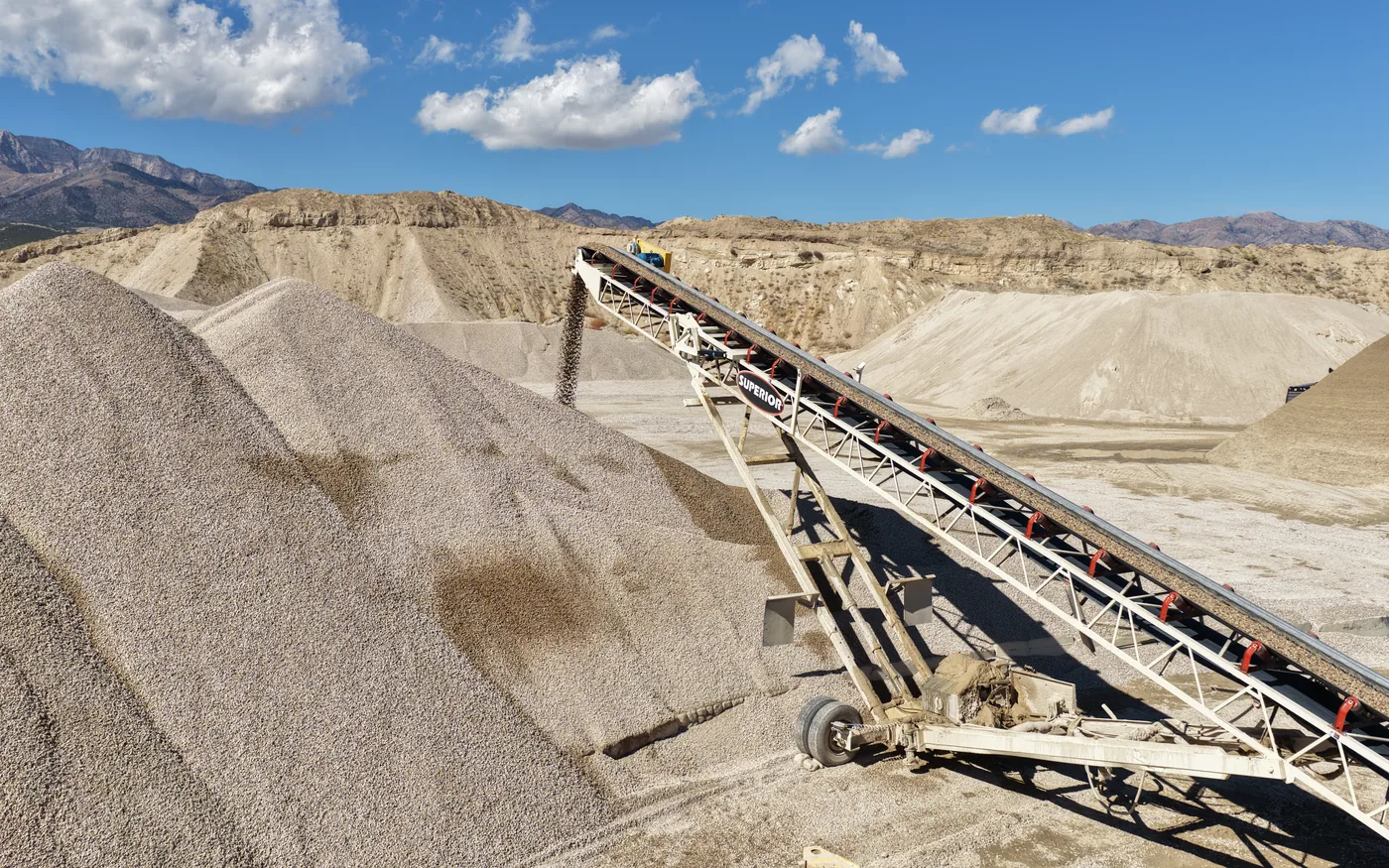
Moving material connects every stage of your operation. From feeding a plant and transferring material between units to building stockpiles and moving product across a site, the conveying system needs to fit the application.
Kimball Equipment Company helps producers evaluate stacking, transfer and overland conveyors, along with tracked, portable and stationary configurations. Our team considers material characteristics, required capacity, travel distance, elevation changes and available space to help plan material movement.
We connect equipment selection with plant layout, installation, conveyor components, belting and field service support.
Conveying Equipment From Multiple Manufacturers
Kimball Equipment Company offers conveying equipment from Superior Industries, TCI and Finlay. Because we represent multiple manufacturers, we can combine conveyors with crushing, screening and washing equipment from different lines within one plant, based on your material, production requirements and the equipment already in place.
Equipment lines vary by territory. Contact your local branch for details. See our manufacturers.
-
Superior Industries
Crushing, screening, conveying and washing equipment.
-
TCI
High-frequency screening, conveyors and portable processing equipment.
-
Finlay
Tracked crushing, screening and conveying.
Stacking Conveyors
Stacking conveyors place material into stockpiles, helping producers manage storage space and product handling. Radial movement, telescoping reach and discharge height influence where material is placed and how the pile is built.
Kimball Equipment Company helps evaluate stackers around your material, required capacity, available space and relocation needs. Portable radial stackers, telescoping radial conveyors, tracked stackers and fixed installations serve different operating requirements.
Where product consistency is important, our team can also review stockpiling methods and automation options that help manage segregation.
Portable Transfer Conveyors
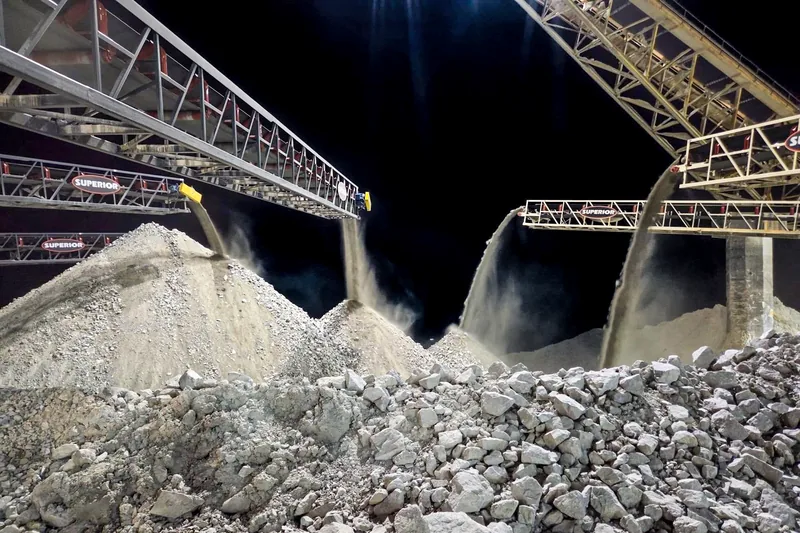
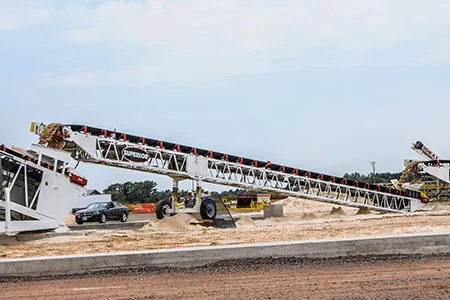
Portable transfer conveyors connect crushers, screens, washing equipment and stockpiling systems. Relocatable conveyor sections provide flexibility as equipment positions, transfer distances and project requirements change.
Our team helps evaluate conveyor length, belt width, capacity, feed and discharge heights, and transport requirements. From connecting individual units to configuring a complete processing spread, the goal is to move material between stages in a way that fits your operation.
Transfer conveyor models
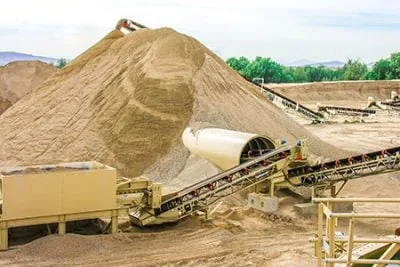
Tunnel Reclaim Systems
Tunnel reclaim systems draw material from beneath a stockpile and deliver it into the processing plant through controlled feed points. They support surge storage and material flow between stages, with the potential to reduce reliance on loaders for reclaiming material.
Our team helps evaluate stockpile layout, material characteristics, feed requirements and conveyor connections to determine how a reclaim system will fit your operation. Technical solutions, installation planning, parts and service support connect the system with the rest of your plant.
Tunnel reclaim model
Overland Conveyors
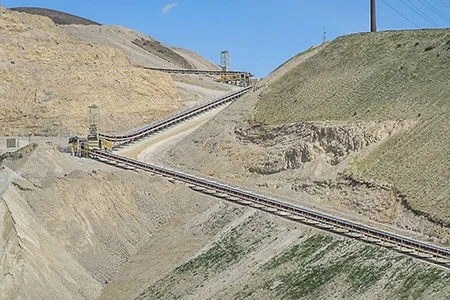
Overland conveyors move material over longer distances between extraction areas, processing plants, stockpiles and loadout points. The route, terrain and elevation changes all influence how the system should be configured.
Kimball Equipment Company helps producers evaluate engineered, modular and portable overland systems around their material and production requirements. Our team considers conveyor capacity, transfer points, installation requirements and potential plant changes when reviewing the application.
Technical solutions, installation support, conveyor components and belting service connect the equipment with the ongoing needs of your operation.
Overland conveyor models
Mobile Heap Leach Conveying Systems
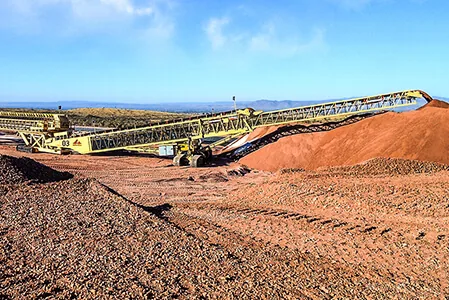
Mobile heap leach conveying systems move and place ore across a leach pad through coordinated feeding, transfer and stacking equipment. Conveyor mobility, reach and transfer arrangements help the system accommodate changes in the stacking area.
Our technical solutions team helps evaluate material characteristics, production requirements, pad layout and equipment integration. We connect application planning with manufacturer equipment, installation support, conveyor components and ongoing service.
Heap leach model
Conveyor Parts, Belting & Service
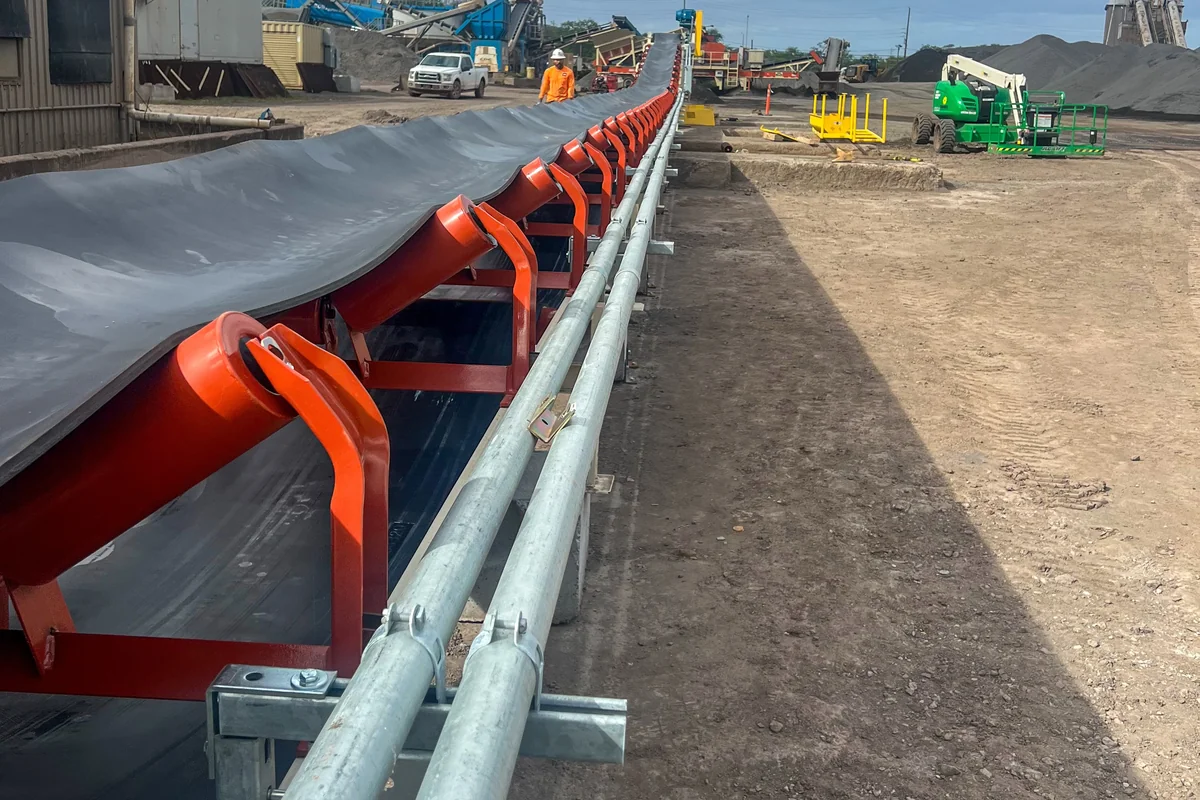
A belt failure or worn component can interrupt material movement throughout the plant. Access to replacement parts and experienced service technicians helps producers address problems and prepare for planned maintenance.
Kimball Equipment Company supplies conveyor belting, idlers, rollers, pulleys, bearings, belt cleaners and drive components. Our parts teams help identify replacements, check compatibility and locate available inventory across our locations.
Field service technicians provide belt installation, splicing, vulcanizing, troubleshooting and repairs. Our parts and service teams work together to evaluate what your conveyor needs and coordinate the next steps.
Conveying Questions
How do I choose the right conveyor for my material and layout?
Start with the material, required tons per hour, distance and change in elevation. Identify where material loads, where it discharges and whether those points move. A conveyor feeding another machine has a different job from one that needs to build a stockpile.
Can you help with unusual material-movement situations?
Yes. Mark the loading and discharge points on a sketch, then add the distance, change in elevation and anything the conveyor must cross or avoid. If the discharge needs to move around a stockpile, start by looking at stacking configurations. For a long route between fixed points, look at transfer and overland configurations. The layout and material determine what fits. Discuss your conveying application.
Do you offer tracked and portable conveyor systems?
Yes. A tracked stacker is worth considering when you need to reposition it around the site. Portable stackers suit operations that relocate equipment between jobs, and a fixed conveyor may fit a permanent transfer. How often the equipment moves and how it connects to the plant will help narrow the choice.
Can you help with replacement parts and belting for a conveyor I already own?
Yes. Send the conveyor make and model, the component or part number, and a photo if available. For belting, include the width and any markings on the existing belt. Our parts team can check fit and availability.
Comparing options? Read Should You Rent or Buy Aggregate Equipment? and What Drives the Cost of Aggregate Equipment?
Talk Through How You Move Material
Tell us about your material, your layout and what you need to move. We can help you work out the next step.